.png)
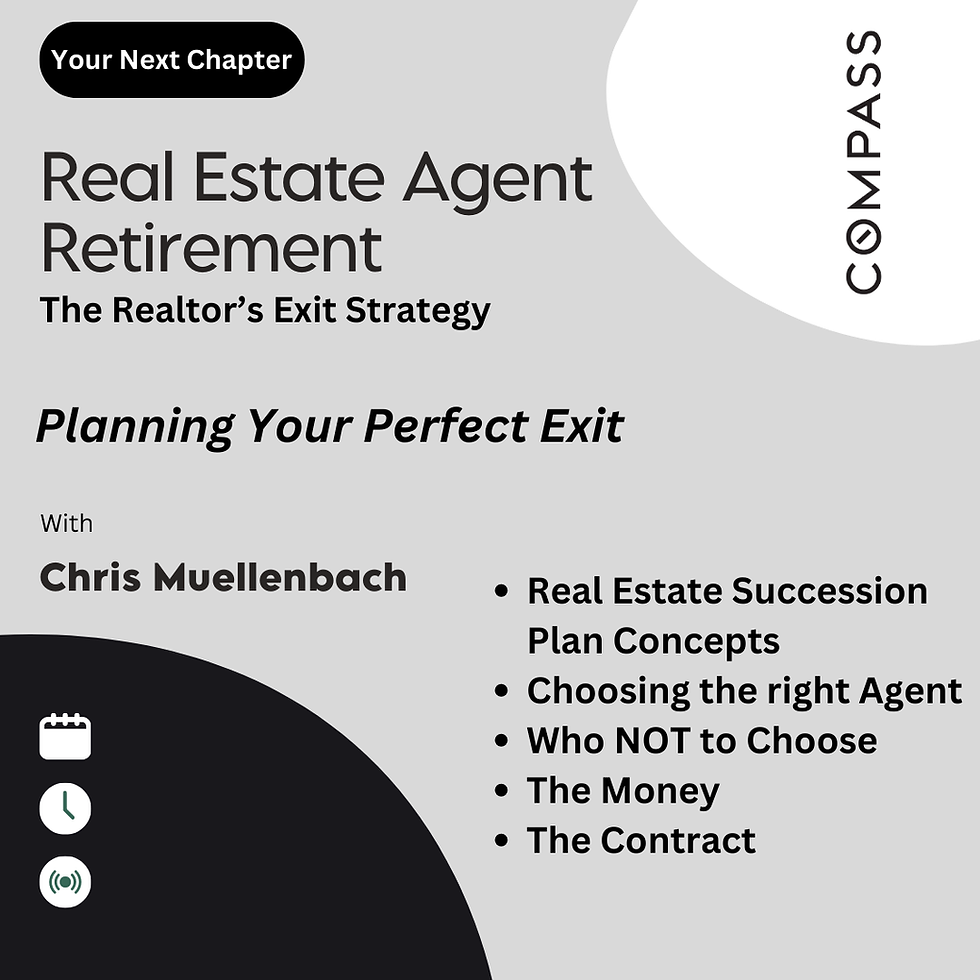
How to Retire from Real Estate: Designing Your Succession Plan
- Chris Muellenbach
.jpg/v1/fill/w_320,h_320/file.jpg)
- Feb 23, 2025
- 2 min read
Updated: Feb 24, 2025
As a real estate professional, you’ve built a business on relationships, trust, and years of
market expertise. But what happens when it’s time to step back? Planning your retirement from real estate isn’t just about closing your last deal—it’s about ensuring a smooth transition for your clients, maintaining the reputation you’ve built, and setting up a succession plan that secures your legacy.
Choosing the Right Successor: Experience is Everything
Handing off your business to the right person isn’t just about helping clients—it’s about finding someone who can run a business, market effectively, and close deals. The ideal successor isn’t just an agent; they’re a business-minded professional with a strategic approach to sustaining and growing what you’ve built.
Look for:
✅ Market Knowledge: Someone who understands local trends and pricing strategies.
✅ Business Acumen: A successor who can manage finances, operations, and client expectations.
✅ Proven Sales Ability: They need to be able to negotiate, close deals, and maintain the momentum you’ve established.
A successor with these qualities ensures you’re not just passing on a book of business—you’re
entrusting your clients to a capable leader who will keep them informed, protected, and satisfied.
Bridging Generations: Keeping Client Relationships Intact

Every agent has their own style of relationship-building. Retiring agents may excel at phone calls, mailers, and in-person client events, while younger agents often lean into social media, blogs, and digital marketing.
The key to a seamless transition is ensuring that your successor values what works and adapts accordingly.
If your clients are accustomed to personal phone calls and handwritten notes, and your successor relies solely on digital marketing, those relationships might weaken. The best successors balance both approaches, integrating fresh marketing strategies while maintaining the personal touch your clients trust.
Creating a Plan for Long-Term Success
Once you’ve identified your successor, take the following steps to ensure a successful transition:
1️⃣ Develop a Timeline – Gradually introduce your clients to your successor through joint meetings, co-branded marketing, and shared client interactions.
2️⃣ Establish Clear Communication – Be transparent with your clients about your transition, emphasizing that their needs will continue to be met at the highest level.
3️⃣ Structure a Business Agreement – Outline commission splits, referral fees, or a structured buyout plan to ensure a financially fair handoff.
4️⃣ Continue Providing Guidance – Even after stepping back, consider mentoring your successor for a period of time to reinforce client confidence and provide industry insights.
Retire with Confidence
A well-thought-out succession plan doesn’t just protect your clients—it protects your legacy, reputation, and financial future. Finding the right successor, maintaining client relationships, and structuring a thoughtful transition will help you step into retirement knowing your business is in good hands.
If you’re ready to start planning your exit strategy, let’s discuss how to make the transition as smooth and successful as possible!


Comments